


1
/
of
4
Kosta
Vicke Lindstrand Sommerso Vase - Kosta LH 1889 Sweden 1960s
Vicke Lindstrand Sommerso Vase - Kosta LH 1889 Sweden 1960s
Regular price
€380,00 EUR
Regular price
Sale price
€380,00 EUR
Taxes included.
Shipping calculated at checkout.
Quantity
Couldn't load pickup availability
A stunning sommerso vase signed by Vicke Lindstrand for Kosta (Sweden), model LH 1889. This exceptional piece represents the mastery of Swedish mid-century glass art at its finest, created during Lindstrand's most influential period at the glassworks.
Blown in solid glass using the sophisticated sommerso technique, vertical layers of amber and cobalt blue are encapsulated within heavy, transparent crystal. The form is tall, slender, and beautifully balanced—typical of Lindstrand's sculptural design language.
Share


Collapsible content
Story
About the Series
The LH 1889 model is part of Lindstrand's celebrated sommerso series for Kosta, created during his tenure at the glassworks (1950-1973). These pieces are characterized by tall, architectural forms and masterful use of color layers suspended in crystal-clear glass, creating mesmerizing optical effects that change with light. The control bubble in the base is a distinctive feature of authentic Kosta pieces from this period, serving both as a maker's mark and testament to hand-blown craftsmanship.
About the Designer: Vicke Lindstrand
Vicke Lindstrand (1904–1983) is one of the essential figures of 20th-century Swedish glass and a key architect of post-war Nordic design identity. Trained as an illustrator and ceramicist, he brought to glass a sensibility marked by line, rhythm, and sculptural elegance.
He joined Orrefors in the late 1920s, where he explored techniques such as graal and ariel, incorporating decorative layers, controlled bubbles, and inclusions that expanded the expressive possibilities of Swedish glass. His work from this period already revealed a singular talent for submerged color and refined forms.
In 1950, Lindstrand joined Kosta, where he reached his most influential period. There he developed pieces with tall profiles, suspended chromatic masses, and optically pure surfaces—a balance between technical control and material poetry that became his distinctive signature. His compositions in sommerso technique—layers of color encapsulated in transparent crystal—are today among the most appreciated works of Scandinavian modernism.
Beyond being a designer, Lindstrand served as artistic director of Kosta, driving its modernization and expanding its presence in museums and international exhibitions. His work is part of the collections of the Nationalmuseum (Stockholm), Röhsska Museum (Gothenburg), and numerous European and North American institutions.
About the Brand: Kosta
Founded in 1742, Kosta is the oldest operating glassworks in Sweden and one of the central institutions of the Glasriket, the historic "Glass Kingdom." Throughout the 18th and 19th centuries, it established itself as a reference manufacturer, known for its pure crystal and meticulous craftsmanship.
In the mid-20th century, Kosta experienced a golden age by incorporating designers such as Vicke Lindstrand, Bertil Vallien, and Göran Wärff, who transformed the house into a laboratory of modernity. Under their direction, the firm adopted innovative techniques such as sommerso, the incorporation of control bubbles as authentication marks, work with optical crystal, and artistic engraving.
This piece is signed simply "Kosta," as it was produced before 1976, when Kosta merged with the Boda and Åfors glassworks to form Kosta Boda. Pieces from this earlier period, bearing only the Kosta name, are particularly sought after by collectors as they represent the independent era of the glassworks and its golden age of artistic innovation under designers like Lindstrand.
Each piece produced at Kosta is born from a dialogue between tradition and experimentation: the master glassblowers—whose know-how is transmitted from generation to generation—imprint precision, weight, and purity to the glass, qualities that have made the brand a symbol of Scandinavian refinement.
This Vicke Lindstrand vase for Kosta is much more than a decorative object—it is a window into the golden age of Scandinavian design, when Swedish glass conquered the world with its formal purity and technical mastery. The sommerso technique, with its layers of color suspended in transparent crystal, creates a hypnotic optical effect that changes with daylight. The control bubble in the base—far from being a flaw—is a mark of authenticity and hand-blown craftsmanship that connects this piece to the master glassblowers of Kosta's golden era. It brings serenity and sophistication to any space, dialoguing with light throughout the day. An investment in enduring beauty and authentic design that connects your home with the artisanal tradition of Northern Europe.
The LH 1889 model is part of Lindstrand's celebrated sommerso series for Kosta, created during his tenure at the glassworks (1950-1973). These pieces are characterized by tall, architectural forms and masterful use of color layers suspended in crystal-clear glass, creating mesmerizing optical effects that change with light. The control bubble in the base is a distinctive feature of authentic Kosta pieces from this period, serving both as a maker's mark and testament to hand-blown craftsmanship.
About the Designer: Vicke Lindstrand
Vicke Lindstrand (1904–1983) is one of the essential figures of 20th-century Swedish glass and a key architect of post-war Nordic design identity. Trained as an illustrator and ceramicist, he brought to glass a sensibility marked by line, rhythm, and sculptural elegance.
He joined Orrefors in the late 1920s, where he explored techniques such as graal and ariel, incorporating decorative layers, controlled bubbles, and inclusions that expanded the expressive possibilities of Swedish glass. His work from this period already revealed a singular talent for submerged color and refined forms.
In 1950, Lindstrand joined Kosta, where he reached his most influential period. There he developed pieces with tall profiles, suspended chromatic masses, and optically pure surfaces—a balance between technical control and material poetry that became his distinctive signature. His compositions in sommerso technique—layers of color encapsulated in transparent crystal—are today among the most appreciated works of Scandinavian modernism.
Beyond being a designer, Lindstrand served as artistic director of Kosta, driving its modernization and expanding its presence in museums and international exhibitions. His work is part of the collections of the Nationalmuseum (Stockholm), Röhsska Museum (Gothenburg), and numerous European and North American institutions.
About the Brand: Kosta
Founded in 1742, Kosta is the oldest operating glassworks in Sweden and one of the central institutions of the Glasriket, the historic "Glass Kingdom." Throughout the 18th and 19th centuries, it established itself as a reference manufacturer, known for its pure crystal and meticulous craftsmanship.
In the mid-20th century, Kosta experienced a golden age by incorporating designers such as Vicke Lindstrand, Bertil Vallien, and Göran Wärff, who transformed the house into a laboratory of modernity. Under their direction, the firm adopted innovative techniques such as sommerso, the incorporation of control bubbles as authentication marks, work with optical crystal, and artistic engraving.
This piece is signed simply "Kosta," as it was produced before 1976, when Kosta merged with the Boda and Åfors glassworks to form Kosta Boda. Pieces from this earlier period, bearing only the Kosta name, are particularly sought after by collectors as they represent the independent era of the glassworks and its golden age of artistic innovation under designers like Lindstrand.
Each piece produced at Kosta is born from a dialogue between tradition and experimentation: the master glassblowers—whose know-how is transmitted from generation to generation—imprint precision, weight, and purity to the glass, qualities that have made the brand a symbol of Scandinavian refinement.
This Vicke Lindstrand vase for Kosta is much more than a decorative object—it is a window into the golden age of Scandinavian design, when Swedish glass conquered the world with its formal purity and technical mastery. The sommerso technique, with its layers of color suspended in transparent crystal, creates a hypnotic optical effect that changes with daylight. The control bubble in the base—far from being a flaw—is a mark of authenticity and hand-blown craftsmanship that connects this piece to the master glassblowers of Kosta's golden era. It brings serenity and sophistication to any space, dialoguing with light throughout the day. An investment in enduring beauty and authentic design that connects your home with the artisanal tradition of Northern Europe.
Details
What's Included
1 Vicke Lindstrand vase for Kosta
Model LH 1889
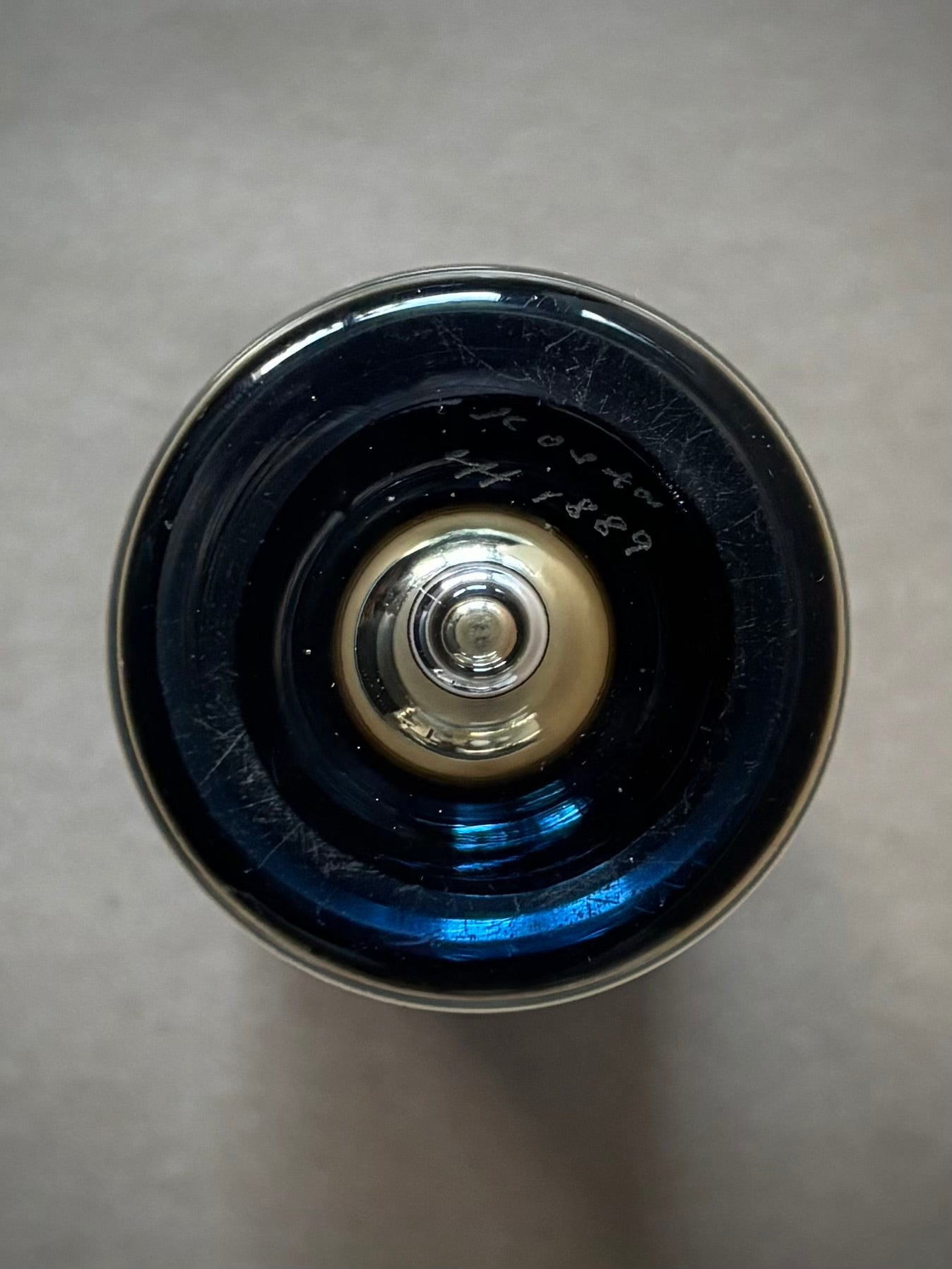
Signed on the base with control bubble
Original vintage piece from the 1960s
Measurements
Height: 22 cm (8.7")
Diameter: 6 cm (2.4")
Substantial weight due to solid glass construction
1 Vicke Lindstrand vase for Kosta
Model LH 1889
Signed on the base with control bubble
Original vintage piece from the 1960s
Measurements
Height: 22 cm (8.7")
Diameter: 6 cm (2.4")
Substantial weight due to solid glass construction
Condition
The hand-polished base is signed "Kosta LH 1889" and features the characteristic control bubble—a perfectly placed air bubble that serves as an authentication mark, typical of Kosta's production during this era. This intentional detail was incorporated by master glassblowers as a signature of quality and authenticity. The glass maintains its optical clarity and the sommerso color layers remain vibrant and well-defined. The base shows lighter scratch marks consistent with age and display.
Minor wear may be present. This elegant piece has retained all its original beauty.
As with all vintage pieces, this item may show signs of previous use and age. Any such marks are signs of authenticity, not flaws, and add to its unique character.
Minor wear may be present. This elegant piece has retained all its original beauty.
As with all vintage pieces, this item may show signs of previous use and age. Any such marks are signs of authenticity, not flaws, and add to its unique character.
Care
To preserve the optical clarity and beauty of this glass vase, clean with a soft, dry or slightly damp cloth and avoid abrasive detergents. This piece is not dishwasher safe. Handle with care due to the weight of the solid glass, and display away from edges to prevent accidental falls.