


Kosta Boda
Rurik Candleholder by Göran Wärff for Kosta Boda Sweden 1970s
Rurik Candleholder by Göran Wärff for Kosta Boda Sweden 1970s
Couldn't load pickup availability
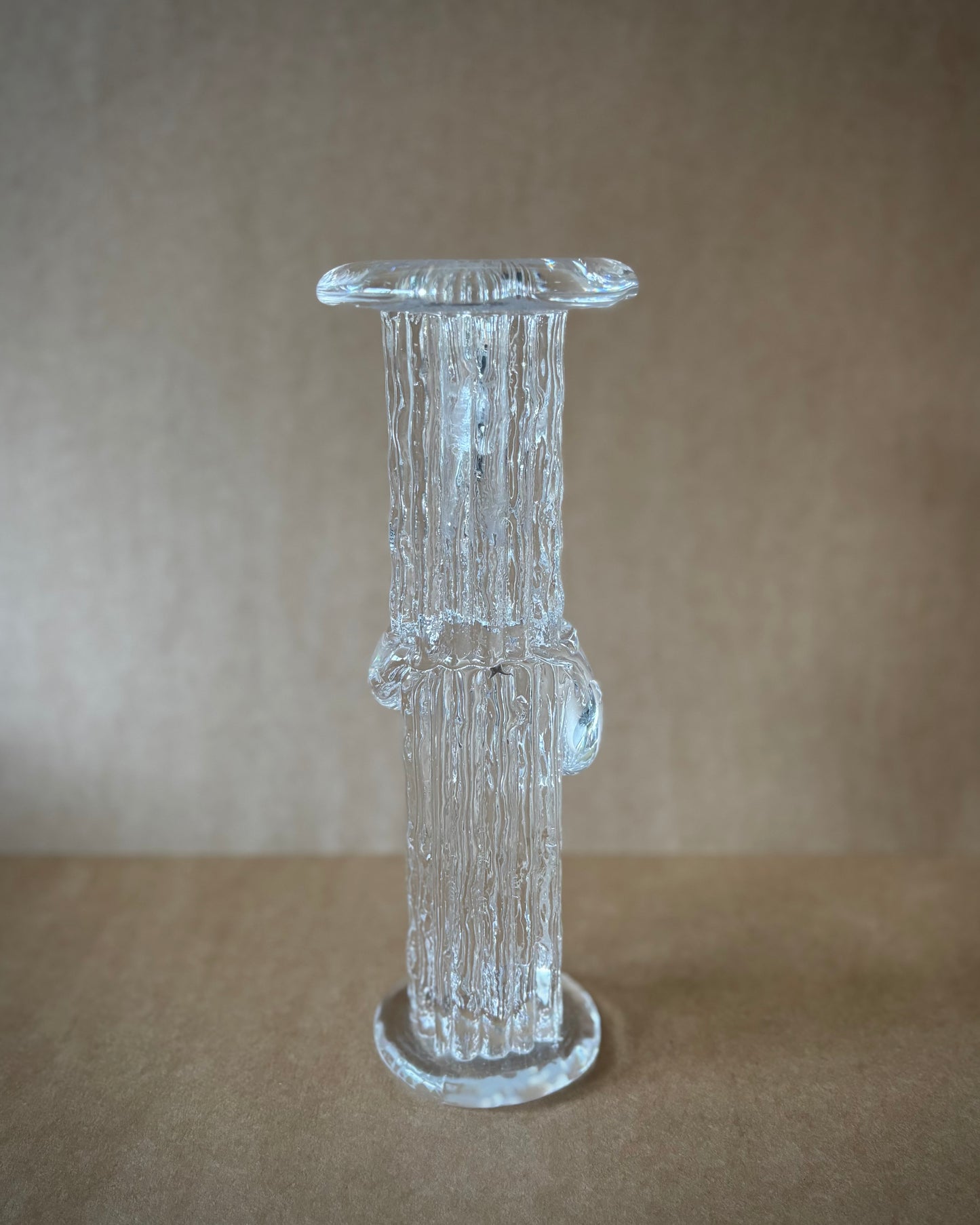
The Rurik candleholder designed by Göran Wärff for Kosta Boda is an iconic piece of modern Scandinavian glass that combines artistic design with Nordic functionality. With its textured surface evoking ice columns or pillars sculpted by light, this object is not just a candle holder but a luminous sculpture that transforms any space into an elegant, serene environment charged with design history.
This Scandinavian design candleholder is characterized by its vertical profile with textured relief that captures and reflects light as if it were sculpted ice columns. Its presence combines sobriety and expressiveness, making it suitable for tables, shelves, or display cabinets, both with or without a lit candle. Its elegant and minimalist design fits perfectly with contemporary, Nordic, or mid-century interiors.
This Rurik candleholder is not simply a functional object—it's a piece of Swedish glass history. The sculptural form and luminous clarity transform light into art, creating subtle variations in tone and intensity throughout the day. This is the kind of design that celebrates the golden age of Scandinavian glass and becomes a treasured piece in any collection.
Share


Collapsible content
Story
The Rurik series—designed in collaboration with Ann Wärff (Ann Wolff) and Göran Wärff—is representative of Kosta Boda's formal language in the 1970s: clear and structured forms with textured surfaces that play with light. These pieces, made of heavy hand-worked glass, are appreciated both for their sculptural character and their practical function on the table or as decorative objects. The Rurik candleholders are found in different heights and proportions, allowing combinations and groupings that enhance their visual and luminous impact in modern, contemporary, or classic interiors.
About the Designer – Göran Wärff
Göran Wärff (1933–2022) was one of the great references in Swedish glass design of the 20th and 21st centuries, closely linked to the history of Kosta Boda. Born in Gotland, Sweden, Wärff developed an artistic sensibility marked by water, light, and the movement of glass as a living material. His training combined architecture, craftsmanship, and painting, which translates into objects where form integrates with touch, light, and the emotion of everyday use.
Wärff worked with Kosta Boda from the 1960s well into the 21st century, and profoundly influenced the brand's aesthetics, developing pieces ranging from everyday utensils to internationally exhibited glass sculptures. His work received awards and public commissions, and his work is represented in several European and international collections.
About Kosta Boda
Kosta Boda, founded as Kosta Glasbruk in 1742, is one of the oldest and most recognized artistic glass houses in the world. Its history is situated in the heart of the Glasriket (the "Kingdom of Glass") in Sweden, a region world-renowned for its tradition in the art of glass. Throughout the centuries, Kosta Boda has collaborated with numerous designers and artists, integrating artisanal tradition with contemporary design innovation. The result is pieces that combine manufacturing quality, aesthetic creativity, and historical relevance, present in museums and collections around the world.
This Rurik candleholder offers a wonderful opportunity to acquire an iconic piece of Scandinavian design—equally suited to selective use, Nordic interior styling, or as a centerpiece in a curated collection of mid-century glass. It carries the quiet elegance and material honesty that define the best of Swedish craft.
Details
Manufacturer: Kosta Boda, Sweden
Series: Rurik
Model: Candleholder
Period: 1970s–1980s
Technique: Hand-blown glass with textured surface
Height: 24.1 cm (approx. 9.5 in)
Diameter: 8.6 cm (approx. 3.4 in)
Weight: approx. 1.6–1.7 kg
Material: Clear transparent glass with relief texture
Color: Crystal clear
Condition
Minor wear may be present. No cracks or chips. As with all vintage pieces, this item may show signs of previous use and age. Any such marks are signs of authenticity, not flaws, and add to its unique character.